
fades
Guard Numbers, Decoded: What 'a 2 on the Sides' Actually Leaves You With
A Daphne barber explains clipper guard numbers 0 through 8 in plain length terms — what each leaves behind, who it suits, and exactly what to ask for in the chair.
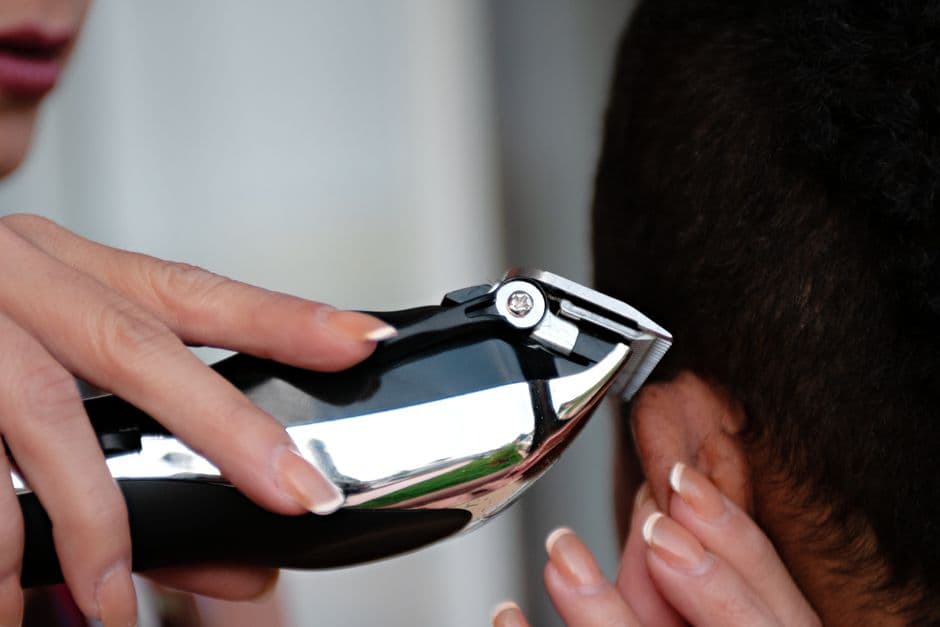
More people freeze up over clipper numbers than over any other part of the haircut. Somebody heard "give me a 2 on the sides" once, liked how it came out, and has been repeating it ever since without knowing what the 2 actually means. Then one day a barber runs a 2 and it looks nothing like they remembered, because the last guy was blending it into a fade and this one took it straight across.
I cut in Daphne every day, and I promise you the numbers are simpler than the panic around them. Here's what each guard really leaves on your head, so you can ask for a length instead of guessing.
The numbers are just eighths of an inch
That's the whole secret. Each guard number adds one-eighth of an inch of length. A 1 leaves an eighth, a 2 leaves a quarter, a 4 leaves a half inch, an 8 leaves a full inch. Multiply the number by an eighth and you have your length. No memorizing charts.
The confusion isn't the math — it's that "a 2" describes the guard, not the haircut. The same 2 looks bold on the sides of a high skin fade and barely-there on a long, textured top. The number tells your barber how short the clipper goes; where you want that short part to live is a separate answer.
Guard by guard, in real terms
Here's the full ladder, what each leaves, and the guy it tends to suit.
| Guard | Leaves about | Who it suits |
|---|---|---|
| 0 / no guard | A shadow — near-bald | Skin-fade bottoms, bald-fade lovers, hot-weather cuts |
| 1 | 1/8 inch | Very short sides, tight fades, a low-fuss look |
| 2 | 1/4 inch | The default 'short on the sides' — clean, forgiving, most-requested |
| 3 | 3/8 inch | Sides with a little coverage, softer contrast |
| 4 | 1/2 inch | A full but neat length — good on thinning or gray hair |
| 5 | 5/8 inch | Long-ish sides, scissor-over-comb territory |
| 6 | 3/4 inch | Grown-out, natural look with just a tidy-up |
| 7 | 7/8 inch | Mostly used up top for length and texture |
| 8 | 1 inch | A trim, not a cut — keeps length, cleans the shape |
Notice the pattern: 1 through 3 is fade-and-short-sides country, 4 and 5 are your neat-but-not-tight middle, and 6 through 8 are really about the top or a light cleanup rather than short sides at all.
What to actually say in the chair
You don't need the exact number if you can describe the result. Give your barber these three things and any of us can build the cut:
- 1
How short at the bottom
Down to skin, down to a shadow, or a specific guard like a 1 or a 2. This is the biggest single decision — it sets the whole feel. - 2
Where the short part stops
Low by the ear, up around the temple, or high on the head. Same guard, totally different look depending on where it lives. - 3
What happens on top
Leave it and clean the edges, take an inch and texture it, or scissor it down. The clippers handle the sides; the top is a separate conversation.
So a complete, no-jargon order sounds like: "Number 2 on the sides, keep it low by the ears, and just clean up the top." Six seconds and there's no surprise waiting for you in the mirror.
The number isn't the haircut. It's one of three answers — how short, how high, and what happens on top.
When to skip the number entirely
If you're chasing contrast — short sides melting up into a longer top — you're describing a fade, and a fade isn't one guard. It's several, stepped and blended so no line shows. Asking for "a 2 all the way up" gets you a buzz, not a fade. For that, tell your barber the vibe and let them pick the ladder of guards. If you want to understand the two most common versions, skin fade vs. taper breaks down exactly how the bottoms differ, and the 7 best fades walks the full menu.
And if all you need is the edges cleaned between cuts, that's not a guard question at all — that's the $15 lineup, the cheapest way to look freshly cut without sitting for a whole haircut.
Bottom line
Guard numbers are eighths of an inch, nothing more. A 2 is a quarter inch of clean, forgiving length — the reason half the shop asks for it. But the number only decides how short; you still owe your barber two more answers about where and what's on top. Give all three and you'll never gamble on a guess again.
- Book on Booksy — men's haircut with line-up from $40, open seven days a week.
- Find your town — we're at 8757 Rand Ave Suite D in Daphne, easy from anywhere on the Eastern Shore.
FAQ
What length does a number 2 guard leave?
A number 2 leaves about a quarter inch of hair. It's short enough to read as a clean, low-maintenance cut but still long enough to hide a little scalp, which is why it's the most-requested guard for the sides of a standard men's cut.
Do guard numbers mean the same thing on every clipper brand?
Mostly, yes. The numbered guards step up in eighths of an inch across the common brands, so a 2 is roughly a quarter inch just about everywhere. The bigger variable is the barber's blade and how they taper — the number gets you close, the technique gets you exact.
How much is a haircut at Blessed Barbershop?
A men's haircut with a line-up is $40. Add a beard for $45, or go full service — cut, beard, and hot towel — for $60. Kids and seniors are $30, and a lineup on its own is $15.